
Origins
The Association for the Promotion of International Law (APIL) started in mid-2025 when a group of concerned individuals met to discuss the need to:
The Association organised an initial seminar for Australian federal parliamentarians in September 2025 and has since been involved in organising both public and private information sessions in state capitals and regional centres.
Incorporation
The Association was incorporated in the Australian Capital Territory in November 2025 with the following objectives:
Structure
The Association is made up of members, of which a small group of volunteers meet as the organisation’s Executive Committee to initiate actions or events that promote understanding of and concurrence with international law. The Association’s position on significant issues of international law is guided by an Advisory and Speakers Panel of distinguished experts. The association welcomes new supporters via its supporter registration form [LINK].

National Convener
Associate Professor Matthew Zagor has 20 years’ experience as a human rights and refugee advocate, practitioner and scholar. His research is characterised by its transdisciplinary approach and diversity, with recent publications covering comparative constitutional law, the legal recognition of refugee narrative identities, the ‘humanity’ turn of international law, and perspectives of legality amongst Israeli soldiers. His current research applies theories of political theology to the legal construction of the border, the legal paradoxes of refugee resettlement programs, and the Australian judiciary's approach to human rights treaty obligations.

Advisory and Speakers Panel
Adjunct Professor Chris Sidoti is a leading human rights advocate and legal expert. He served as Australian Human Rights Commissioner (1995-2000), Australian Law Reform Commissioner (1992-1995) and was the founding Director of the Australian Human Rights and Equal Opportunity Commission (1987-1992). Internationally, he was a member of the UN Fact-Finding Mission on Myanmar (2017-2019) and currently is a Commissioner on the UN Independent International Commission of Inquiry on the Occupied Palestinian Territory, including East Jerusalem, and Israel.

Advisory and Speakers Panel
Emily Crawford is a Professor at the University of Sydney Law School, where she teaches and researches in international law, international humanitarian law, and international criminal law. She has published widely in the field of international humanitarian law, including three monographs (The Treatment of Combatants and Insurgents under the Law of Armed Conflict (OUP 2010), Identifying the Enemy: Civilian Participation in Hostilities (OUP 2015) and Non-Binding Norms in International Humanitarian Law: Efficacy, Legitimacy and Legality (OUP 2021)) and two textbooks (International Humanitarian Law (with Alison Pert, 3rd edition, CUP 2024) and Public International Law (co-edited with Alison Pert and Ben Saul, CUP 2023). She is Director of the Sydney Centre for International Law at the University of Sydney, and a co-editor of the Journal of International Humanitarian Studies. In recognition of her outstanding contribution to international law research, she was awarded the Max Planck-Cambridge Prize for International Law in 2023.

Advisory and Speakers Panel
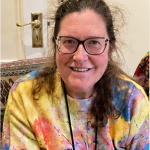
Dr McIntyre is a Senior Lecturer in Law at Adelaide University and a recognised specialist in international courts and tribunals. She holds a PhD from the University of Melbourne, supervised by Judge Hilary Charlesworth and Professor Margaret Young, and a first-class LL.M. in International Law from the University of Cambridge. Her PhD was nominated for both the Melbourne Law School Harold Luntz Prize for best thesis, and the University of Melbourne Chancellor’s Prize. Dr McIntyre's academic work is published in leading journals and books, and has been cited in multiple written and oral submissions before the International Court of Justice. She has significant litigation experience, including as counsel in cases before international courts and tribunals. Dr McIntyre has become a prominent public voice for international law, with over 350 appearances across global outlets including the BBC, CNN, ABC, Al Jazeera and Reuters. She is a co-host of the popular Called to the Bar international law podcast, and regularly contributes commentary on current international legal issues for outlets such as Opinio Juris, Völkerrechtsblog, EJIL:Talk!, and Verfassungsblog. She also really likes Stray Kids.

Advisory and Speakers Panel
Michelle graduated from Trinity College, University of Dublin, Ireland in 1991 with an honours degree in Sociology and German, before training as a journalist. She then worked as a journalist for newspapers and magazines (both political and lifestyle) for more than 20 years, in Australia, Britain and Ireland. Her most recent staff position was at The Canberra Times, as editor of the Saturday news review and analysis section. Michelle joined the Faculty of Arts & Design at the University of Canberra as a Teaching Fellow in Journalism & Communication in 2011. Her Phd Communication thesis is currently under examination, with results expected any day. Her doctoral research topic is the Australian print media's reporting on the Northern Territory Emergency Response 2007, between its announcement and enactment.
Advisory and Speakers Panel
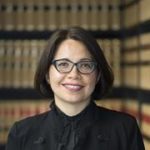
Associate Professor Madelaine Chiam is Deputy Dean and Associate Dean Academic and Partnerships in the La Trobe Law School. She was Associate Dean Learning and Teaching from 2022-2024. Madelaine researches primarily in public international law and her research aims to understand how international law is used in domestic contexts and she studies international law both as a public discourse and as a set of legal doctrines. Madelaine is especially interested in the ways that international law is, and has been, taught, written about and deployed by academics, politicians, the media and other participants in public debates. Madelaine is pursuing this research through two different projects. The first examines the role of international law as a public and popular language, through studying the role of international in the public sphere in both current and historical contexts. Research in this project includes her monograph, 'International Law in Public Debate' (Cambridge University Press, 2021). Second, Madelaine explores the relationships between the global and the local, particularly through the lens of the role of international law in Australian life. She is currently pursuing this research through the project, 'Shaping International Law in Times of Global Upheaval: Australian Experiences', a Discovery Project funded by the Australian Research Council. Madelaine is the lead chief investigator on the project team, working with Jeremy Farrall (ANU), Christopher Michaelsen (UNSW) and Jordana Silverstein (UniMelb). Madelaine is member of the La Trobe Law School International and Comparative Law Research Cluster. She is also a regular member of the faculty of the Harvard Law School Institute for Global Law and Policy Scholars Academy, where she has convened writing workshops and co-taught courses in Human Rights and in Comparative International Law. Prior to joining La Trobe, Madelaine was a Senior Fellow at the Melbourne Law School. She has previously been a Research Fellow and Lecturer at the Australian National University College of Law and a lawyer in commercial practice in Melbourne.
[Others will be being added to this list]